
Career advice · Updated October 2026
How to Become a Nurse in Kenya and Work Abroad: NCK Licensing, Exams and Safe Routes Overseas
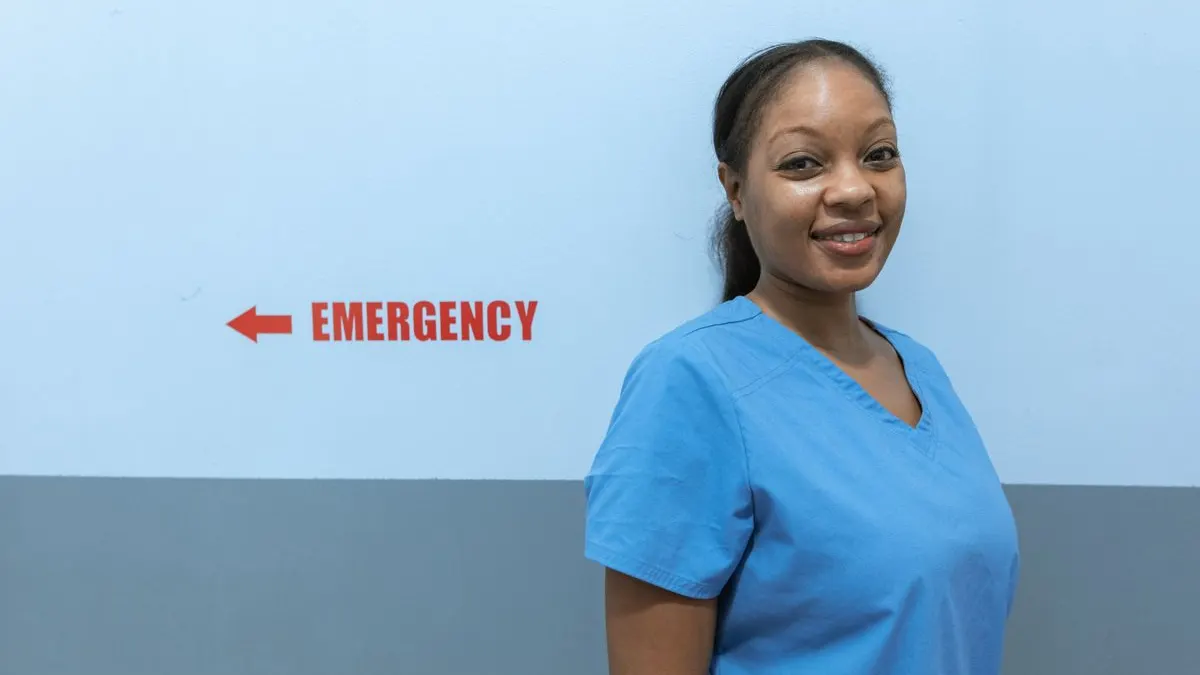
Nursing is one of the few careers in Kenya that can take you from a local hospital to a job overseas, and many students choose it with that in mind. But the path has fixed steps, and skipping any of them, or trusting the wrong agent, can cost you years. This guide explains how to become a nurse in Kenya and work abroad: training, indexing, the Nursing Council of Kenya (NCK) licensure exam, internship and licensing, and then what overseas regulators and recruiters actually require. All requirements are taken from NCK, the UK Nursing and Midwifery Council (NMC) and official UK recruitment guidance.
Step 1: Train at an NCK-approved institution
Every nurse and midwife practising in Kenya must be registered and licensed by NCK under the Nurses Act (Cap. 257). That starts with training: only programmes at institutions approved by NCK lead to the licensure exam. Before you accept an admission, check the college on NCK’s list of approved training institutions. A private college that is not on it cannot get you registered, however polished its brochure.
The main routes are a diploma (Kenya Registered Community Health Nursing, KRCHN) at KMTC or another approved college, or a Bachelor of Science in Nursing (BScN) at a university. University places go through KUCCPS; Business Radar lists the nursing cut-off points per university and the cost of studying nursing in Kenya.
Once admitted, you are indexed with NCK as a student. NCK uses student indexing to confirm you met the minimum entry requirements for your programme, so make sure your college completes it.
Step 2: Pass the NCK licensure examination
NCK decides who is eligible to sit the exam by looking at your conduct, academic and practical progress at your training school. According to NCK’s examination page:
- The exam has four papers for basic cadres and three papers for other cadres.
- Each paper lasts three hours and mixes multiple-choice, short-answer and long-answer questions based on brief healthcare scenarios.
- Candidates are allowed a maximum of four resits and must satisfy the Board of Examiners in each paper.
- Exams run in the April and August series. You register through the NCK online portal within the registration window.
Treat this exam as seriously as your final college exams. A pass is the gateway to everything that follows, including work abroad.
Step 3: Internship (BScN graduates)
NCK’s registration and licensing rules set different internship requirements for degree nurses:
| BScN route | Internship before registration |
|---|---|
| Basic BScN | One-year internship (Ministry of Health or self-sponsored) |
| KRCHN upgrading to BScN | No internship; apply directly for registration after passing the exam |
| Registered Nurse/Midwife (RN/M) upgrading to BScN | 15 weeks of self-sponsored internship in community health nursing |
| Registered Nurse (RN) upgrading to BScN | 27 weeks of self-sponsored internship in midwifery and community health nursing |
Internship must be completed before registration, and registration is subject to passing the licensure exam.
Step 4: Register and get your practising licence
After results are released, you apply online for registration and licensing through the NCK online service portal. NCK says the practice licence is issued within 72 hours and the registration certificate within four weeks.
Your licence is not a one-off. NCK’s FAQs explain that the Annual Practising Licence is applied for and renewed through the portal, and that you must meet the prescribed Continuous Professional Development (CPD) requirements. Employers, at home and abroad, check that your licence is current, and anyone can verify registration and licence status through NCK’s online verification service. Keep your CPD points up to date from your first year; a lapsed licence is one of the most common reasons overseas applications stall.
Step 5: Build real experience in Kenya
Overseas employers and regulators want nurses who can practise safely from day one. Most nurses who move abroad spend time working in Kenya first, in public hospitals, mission hospitals or private facilities. Browse current healthcare jobs in Kenya, and present your clinical rotations, specialties and licence number clearly using our nurse CV guide and the free CV builder. For public-sector pay, Business Radar explains nurse salary in Kenya by job group.
Working in the UK: what the NMC requires
To work as a registered nurse in the UK you must join the NMC register. For nurses trained outside the UK, that involves an English test and a two-part Test of Competence.
English language
The NMC accepts only two tests, IELTS Academic and OET, with these minimum scores in each skill:
| Test | Listening | Reading | Writing | Speaking |
|---|---|---|---|---|
| IELTS Academic | 7 | 7 | 6.5 | 7 |
| OET | B (350+) | B (350+) | C+ (300+) | B (350+) |
You may combine results from two sittings of the same test taken within 12 months of each other, and results are valid for two years. If you are deciding which test to book, Business Radar compares IELTS, PTE, TOEFL and Duolingo fees for Kenyans; remember that only IELTS Academic and OET count for the NMC.
Test of Competence
- Part 1, the computer-based test (CBT), is taken at a Pearson VUE test centre, available in most countries. It has a numeracy section (15 questions) and a clinical section (100 questions). See the NMC CBT page.
- Part 2, the OSCE, is a practical clinical exam held only at approved test centres in the UK.
You can take the two parts in either order, but you must pass both. The NMC also checks your health and character and carries out a face-to-face ID check.
Kenya is on the UK’s amber list: why it matters
This is the part many agents leave out. Since 11 November 2021, Kenya has been on the amber list of the UK’s Code of Practice for international recruitment of health and social care staff. According to NHS Employers, this means active recruitment of health workers from Kenya is only allowed within the terms of the government-to-government agreement.
Kenya and the UK signed a bilateral agreement on healthcare workforce in July 2021, with the Ministry of Labour leading recruitment in collaboration with the Ministry of Health. NHS Employers describes it as still in a pilot phase. Past calls for nurses under the agreement have required Kenyan citizenship, a nursing diploma or degree, NCK registration and licensing, and a police clearance certificate, and have advised applicants to take IELTS or OET and the NMC CBT.
What this means for you:
- Be very careful with anyone who says they are “recruiting Kenyan nurses for the NHS” outside the government programme. Ethical UK recruiters are not supposed to actively target you.
- Watch the Ministry of Labour and the National Employment Authority for official calls under the agreement.
- Get your NCK licence, English test and CBT in order early, because official calls usually ask for them.
Gulf countries and other destinations
Saudi Arabia, the UAE, Qatar and other countries have their own licensing bodies, exams and document checks, and many Kenyan nurses are recruited there through private agencies. Business Radar explains how to apply for nursing jobs in Saudi Arabia. Wherever you go, check the regulator’s official website for the current rules rather than relying on an agent’s summary.
Staying safe with recruitment agencies
- Use only agencies licensed by the National Employment Authority (NEA). Business Radar shows how to check if a recruitment agency is licensed, and our abroad jobs verifier helps you check an overseas offer.
- Never hand over your original certificates or passport to an agent.
- Insist on a written job offer from a named employer, with salary, hours and accommodation, before paying for medicals, visas or travel.
- Learn the warning signs in our guide to spotting fake job adverts.
- Most destinations also want a police clearance; here is how to apply for a certificate of good conduct.
Key takeaways
- Train only at an NCK-approved institution and make sure you are indexed.
- Pass the NCK licensure exam (April or August series), finish any required internship, then register and keep your annual licence and CPD current.
- For the UK, you need IELTS Academic or OET at NMC scores, plus the CBT and the UK-based OSCE.
- Kenya is on the UK amber list, so active UK recruitment of Kenyan nurses should go through the government-to-government programme. Treat other “NHS recruitment” offers with caution.
Frequently asked questions
How long does it take to become a registered nurse in Kenya?
It depends on the route: a diploma (KRCHN) or a BScN, plus the NCK licensure exam and, for basic BScN graduates, a one-year internship before registration. Check your programme's length with the college and NCK.
Can I work abroad with a Kenyan nursing diploma?
Yes, many destinations accept diploma-trained nurses, but each country's regulator sets its own requirements. You need current NCK registration and licensing, and then the destination's own exams and English tests.
What IELTS score does a Kenyan nurse need for the UK?
The NMC requires IELTS Academic scores of 7 in listening, reading and speaking and 6.5 in writing, or OET grade B in listening, reading and speaking and C+ in writing.
Are UK agencies allowed to recruit Kenyan nurses?
Kenya is on the UK Code of Practice amber list, so active recruitment is only allowed within the terms of the Kenya-UK government-to-government agreement, which NHS Employers says is in a pilot phase.
Related jobs in Kenya
- Pharmaceutical Technologist · Goodlife Pharmacy Africa
- Superintendent Pharmacist – Bishan Plaza, Westlands · Avyora Health Group Limited
- Nurse · Scanlab Kenya
- Medical Laboratory Technologist/Clinical Instructor · University of Eastern Africa
- Operations Intern · AMREF Flying Doctors
- Head of Quality (Pharma) · MSVL Group